

Writing for Non-Writers
Do you like the idea of writing for us, but don’t have the confidence or the experience? This article aims to change your mind!
And after you’ve written your piece, this article will give you some ideas on how to polish it up.
Annie Kirby on Sensory Details
Annie talks about using sensory details in your writing:
Annie’s debut novel The Hollow Sea is available from 18th August 2022.
Alison Habens
Alison gives some tips on how to write for our ‘Life Under the Surface Theme’:
Alison mentions sponsoring seed pods. If you’d like to do that you can find out more here.
Whales and Dolphins
Ocean conservationist Natasha Jones tells us about cetacean-spotting on Portsmouth’s ferry routes:
“Setting sail, for me, evokes such a strong sense of emotion. Now that I am sitting here, trying to think about how to describe it, I can feel it rising from my stomach to my chest. It’s not merely excitement (although that’s certainly what it is) it’s also the feeling of the unknown possibilities as you venture out and an added dash of adventure. The idea of what is ‘below the surface’ is all-consuming – it’s what I am constantly thinking about as I gaze intently upon the horizon (and it’s deceptive how enormously far away that horizon is). What is out there? What will I see today? What is just below that azure blue, happily minding its own business and going about its day without a care in the world?
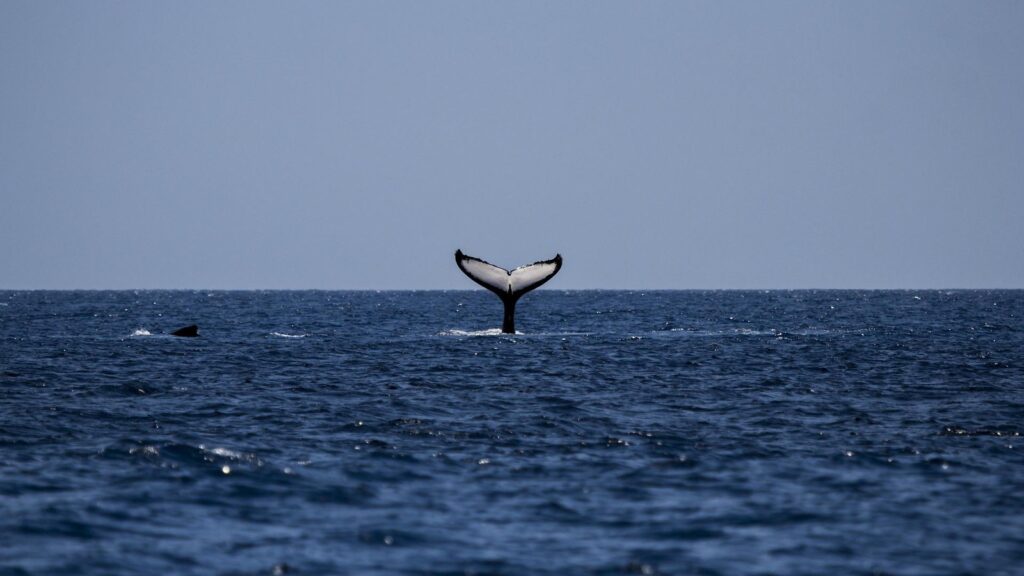
As an ocean conservationist I spend the majority of the time – come rain, sleet, hail, wind and occasionally sun – with binoculars in hand and a mission in my mind to gather as much data as possible on my sailing routes (between Portsmouth and Spain) on cetaceans – the fancy word for the wonderful animals that are whales, dolphins and porpoises. What species can I see? What location? How many? What behaviours are they displaying? The more we know about cetaceans, the more we can do to protect them. This data is one of the many building blocks that go into whale, dolphin and porpoise conservation. We can use this vital information to help create protective legislation, redirect shipping routes (to avoid things like ship strikes or disturbing significant feeding or breeding areas) and even help researchers with their studies.
As I stand there, readying myself for what nature has on offer that day – burning with the prospect I might see something utterly fantastic – I am also often listening to podcasts by marine biologists and soaking up as much information with my ears as I am with my eyes. I select any interesting nuggets of information and store them in my mind, ready for use when I give my talks to the passengers I share the boat with.
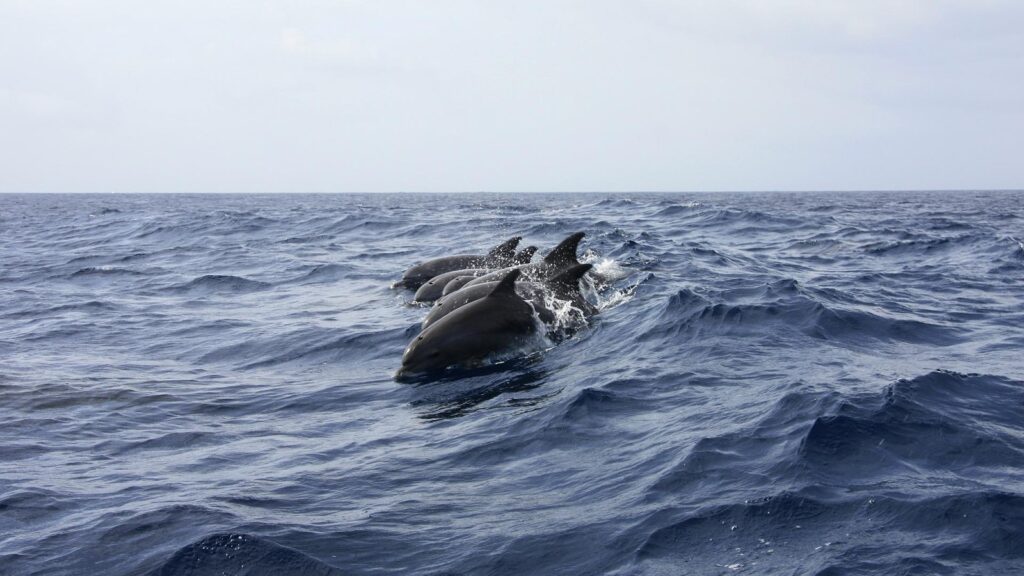
Giving talks is another perk of the job. I love not only learning as much as I can, but also sharing that passion and enthusiasm. Quite often I learn a lot in return. Some of my favourite moments are when I am questioned (‘why are whales so big?’) and it pushes me to learn more (answer: they are supported by the water, and they have access to a lot of food due to an interesting coincidence in cetacean evolution and a global increase in colder, nutrient rich waters – thank you, ice age!). Some of the most enthusiastic passengers (and the most dedicated, come rain or shine) are the young people on board. They come already full of knowledge about whales and dolphins and still want to know more (like ‘what does a sperm whale feel like to touch?’ That I do not personally know!).
Quite often I won’t see anything for hours, it may just be me and the ocean. Yet when I do, I actually feel completely soothed and calmed by the power and mystery of the rolling waves. I know the whales and dolphins are out there and I feel extremely privileged when a cetacean decides to come up to breathe, to jump alongside the boat or just roll by for a moment. The ocean is a big place. When I see a species of animal that is vital for not only the ocean’s ecosystem, but also the world’s (check out the whale pump!) I recognise the significance of that moment, as do the passengers on board. My heart leaps, people shout out with joy and there is a buzz of excitement because powerful memories have just been forged in those moments. Let’s be honest, who is going to forget the moment they saw a dolphin or whale? My days are littered with stories of momentous occasions, of people’s experiences with cetaceans. The sharing of these stories is vital and it’s proof that what lives beneath the surface of the ocean is something to treasure.”
For more, check out Natasha’s ORCA blog.
Sue Shipp on Dialogue
Pens of the Earth editor and contributor Sue Shipp talks about how to use dialogue to get across a positive environmental message by analysing her short story Every Little Helps.
Sue’s stories have been published by Portsmouth News and Star & Crescent, and performed by The King’s Youth Theatre (Save Our Seas showcase).
Intertidal Survey Volunteering
Emily Stroud (Community Engagement Officer for Hampshire & Isle of Wight Wildlife Trust) talks to us about intertidal surveys and other citizen science projects:
“The life in our seas and around our coastlines is mesmerising, secretive and vital to our health and wellbeing. Currently our natural world is facing a great deal of threats, from climate change (and its consequences, such as rising sea levels, coastal squeeze and coastal erosion) to harmful fishing practices, habitat destruction and a variety of pollution – plastic, chemical, light and noise. While our oceans are a resilient and adaptive environment, these pressures are taking their toll and actions need to be taken.
For the average person it may be very difficult to feel like you are doing something tangible towards saving our locals seas. Eco-anxiety is a growing trend and we all feel the urge to take a stand and protect our miraculous world. But how? Apart from trying to avoid single use plastic, dutifully recycling, signing petitions, challenging politicians and thinking harder on our food choices (is it local? is it sustainable?) people are feeling there’s still more to do – they have the itch for it and an itch must be scratched.
That’s where we come in with our metaphorical back scratcher! I work as a Community Engagement Officer for the Hampshire & Isle of Wight Wildlife Trust’s Secrets of the Solent project, which is supported by the National Lottery Heritage Fund. The aim of the project is to raise the profile, appreciation and understanding of the Solent’s marine life and, in doing so, help people to make positive behavioural changes towards safeguarding the Solent for future generations. While we have many rewarding volunteer roles available, I wanted to focus on one in particular – the intertidal survey volunteer, a part of our citizen science program.
In a nutshell, citizen science is when public participation in scientific research leads to increases in scientific knowledge. You can collect, contribute, and collaborate in data monitoring/collection programs. Our intertidal surveys are a fantastic way to help support your local marine environment, meet new people, and get a good dose of nature-bathing for your mental and physical health. We meet roughly twice a month, between March and October, at coastal locations across both Hampshire and the Isle of Wight. Each survey lasts around two hours and involves surveying a stretch of shoreline to identify and record marine species.
The data is invaluable to our conservation activities and supports our efforts to secure legal protections like Marine Conservation Zones. You don’t need any special knowledge or experience to take part, but you must be over 18, or over 16 and accompanied by a participating parent or guardian. If you want to learn more about our seas and the flora and fauna that lives there, this is for you.
At the end of the day, who doesn’t enjoy a bit of rock pooling with a profound purpose? Perhaps you will see vibrant snakelocks anemones or sand mason worms, perhaps an endangered European eel or an elusive stalked jellyfish. It is truly astounding what we have living on our Solent shores.
For more information please visit our website.
There are many fantastic citizen science projects to get involved with, not just ours. Some you can do from the very comfort of your own home! See our website pages for a list of other organisations leading a variety of fascinating citizen science projects.”
Seagrass Restoration Videos
The work of volunteers to restore the Solent’s seagrasses is showcased in this video from HIWWT:
The project is also featured in this segment from the BBC’s Countryfile (starting at 45:05; BBC iPlayer account required). If you keep watching, it segues neatly into another segment on beach cleaning, which leads us to …
Beach Cleans
Earlier this year, Alison Habens lead a creative workshop for the Kings Youth Theatre which lead to the writing of some superb performance pieces for their ‘Save Our Seas’ showcase in June.
One of the inspirations was this piece, The Million Mile Beach Clean from Surfers Against Sewage:
“Let’s make the UK one million miles cleaner! Our aim is to make the UK a cleaner, greener place for everyone to enjoy. That’s why we’ve created our biggest ever beach clean campaign: the Million Mile Clean. We’re mobilising 100,000 people each year to get out there and protect the areas they love.
Beach, street, river or mountain, the Million Mile Clean is open to everyone, no matter where you live. Whether you’re an individual beach cleaner, a group of friends, a team of colleagues, a school or community group, every piece of rubbish you collect brings us one step closer to stopping plastic pollution. We send out a free beach clean kit to everyone who registers!”
Denise Baden
Denise Baden is Professor of Sustainable Practice at the University of Southampton and the founder of Green Stories. Here she talks about the effectiveness of fiction to inspire environmental change:
Solent Seagrass Restoration Project
Ellie Parker tells us about seagrass in the Solent, and what is being done to restore it:
“Beneath the waves of the Solent are hidden underwater gardens of seagrass. These marine flowering plants have roots, grass-like leaves and produce flowers and seeds. Under the right conditions, these plants can grow to form flourishing, green underwater meadows which provide food and shelter for an array of wonderful marine life.
The seagrass meadows in the Solent are of international importance. They support rich biodiversity, including amazing species such as sea anemones, stalked jellyfish, sea slugs, pipefish and seahorses. They act as nurseries for commercially important fish species such as cod and sea bass, the latter of which spend up to seven years growing in the Solent before joining the migratory adult population. Cuttlefish visit the seagrass meadows to breed as well, attaching their black eggs known as ‘sea grapes’ to the seagrass leaves. Seagrass also provides a major food source for brent geese, which make the 3000 mile journey from Siberia to the Solent every year for a milder winter.
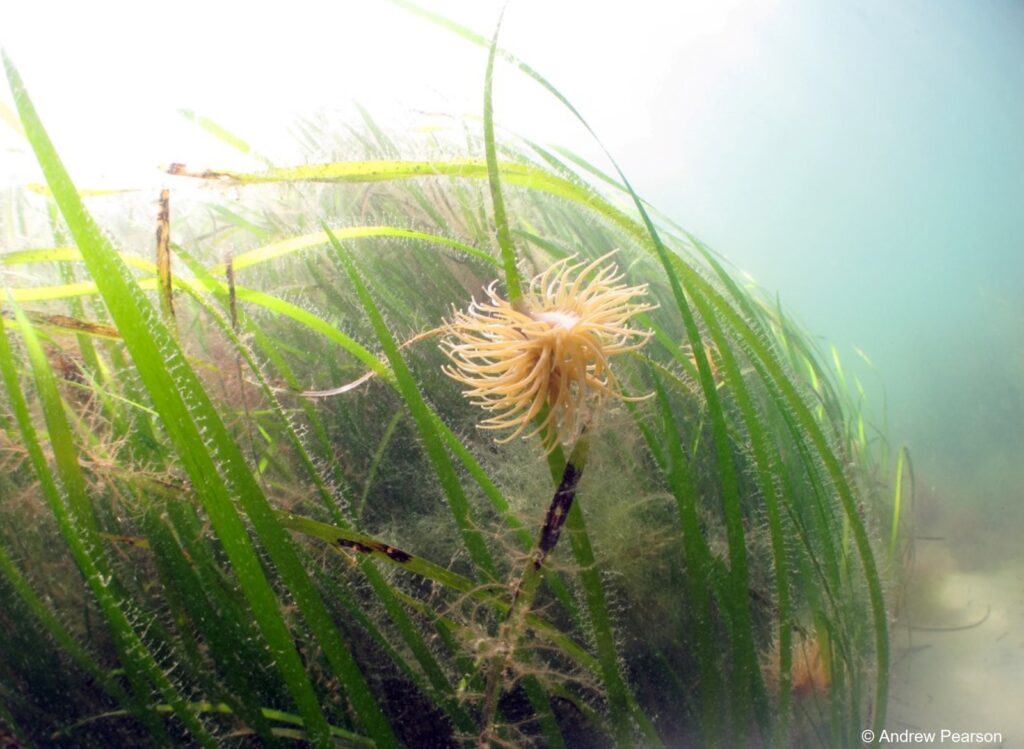
Seagrasses are incredibly important allies in the fight against climate change. They absorb massive amounts of carbon dioxide from the surrounding seawater and their long leaves slow the flow of water, which encourages settlement of carbon-rich sediment down into the seabed where it is then buried and locked away. This amazing plant also improves our water quality and protects our shores from coastal erosion by slowing wave energy with their leaves and by stabilising soft seabed sediments with their roots.
Sadly, seagrass is disappearing. We’ve lost over 90% of our seagrass meadows in the UK over the past century. Disease, physical disturbance from dragging anchors and chain moorings, as well as human-induced threats such as pollution are putting seagrass under significant pressure.
At Hampshire and Isle of Wight Wildlife Trust we are working to protect and restore our lost seagrass meadows, creating a wilder Solent for both people and wildlife. This is with the help of our amazing team of Solent Seagrass Champion volunteers, who are involved in all aspects of the restoration work – from helping to survey existing seagrass meadows in the early hours of the morning, to sustainably collecting seagrass seed, packing these into hessian pods and planting them back out into the Solent.
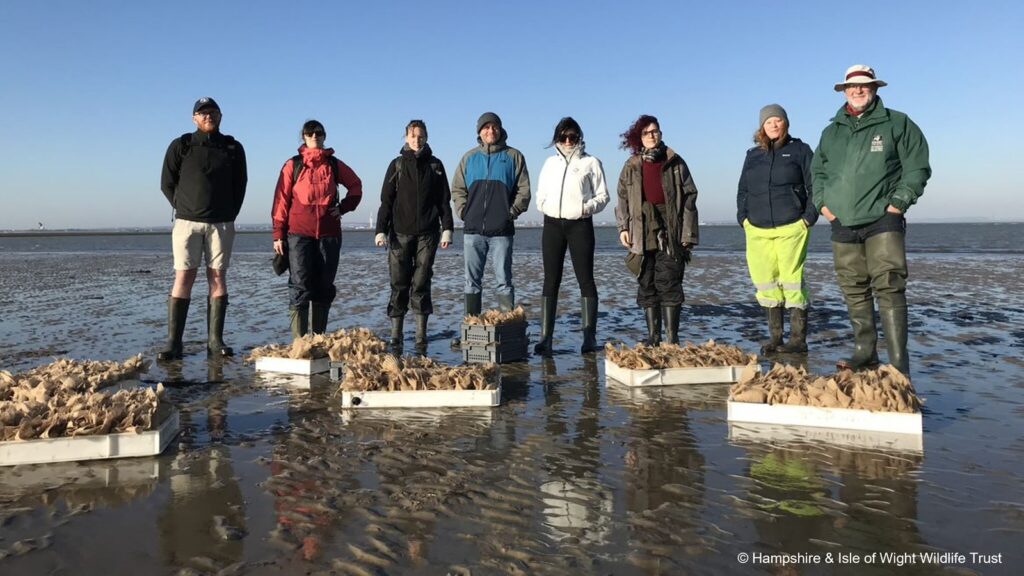
Together we’ve planted over 36,000 seeds since December 2021, and are now starting to see seedling growth at one of the restoration sites! This is incredibly exciting not only because it’s our first recorded success for the project, but also because it acts a reminder that if we make space for nature and give it a helping hand, it can and will bounce back.”
You can read more about the project here.
Creatively Interpreting Our Themes
Some thoughts on writing from our founder, Helen:
Lists
We’ve created two lists of exciting local and national environmental initiatives. Here’s the one for our Life Under The Surface theme. (The one for the Making Places for People Theme is here.)
You don’t need a Twitter account to view these lists. Just click on these links and scroll down to view the latest information.
Seahorses in the Solent
Did you know there are seahorses in the Solent?
(Video courtesy of Hampshire & Isle of Wight Wildlife Trust.)