

A Gentle Flowering
by Jane Andreoli
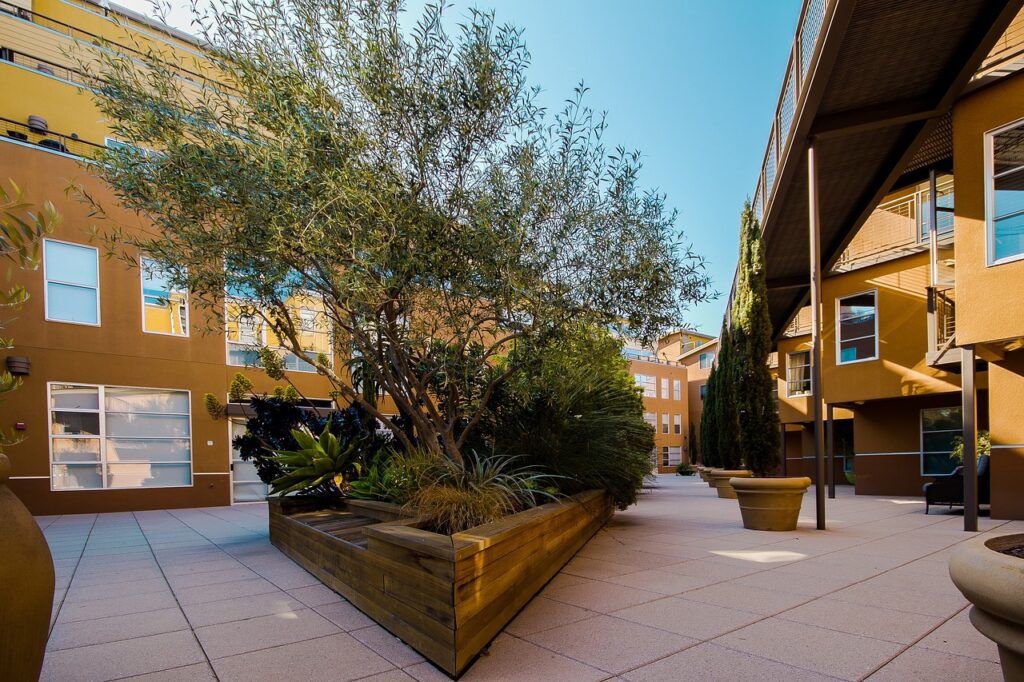
Ruby Brent knew she would regret it from the moment she signed the tenancy agreement and took the keys. A first floor flat above a shop, in the middle of a jaded shopping precinct. There was no lift. She would have to haul everything she owned up a steep flight of stairs. No parking unless you wanted to risk one of the much-vandalised garages two streets away. Still, that wouldn’t concern her. She could walk to work. That, after all, was why she had moved here. She would no longer have the expense of running a car. And there was no garden.
You coped with everything life threw at you as best you could. You accepted loss. You were pragmatic. You took work where it was available. You did the right things to ensure that you had a roof over your head and enough money to keep it there, and this is where you ended up. She felt the stirrings of claustrophobia as she went through the tiny rooms. There were four of them. Kitchen, bathroom, bedroom and living room. And there was no garden.
She opened a window and leaned out. The smell of the street below plugged her nostrils. It was a mixture of hot pavements, fermenting rubbish bins, and an endless tide of people flowing to-and-fro. She supposed that eventually this would feel like home. Eventually she would know her neighbours. Perhaps there would come a time when someone in this relentless throng would call up to her and wave.
At the moment it all felt impossible. She felt like a small animal abandoned in a cage, while life flowed past uncaring, and unseeing.
She yearned for her lost garden.
Days flowed into weeks. The weeks stacked up like bricks, walling her firmly in place. But at work Ms Brent was doing well. Very efficient in her new job. Rather withdrawn, not one for gossiping, sound and reliable. Nobody knew that Ms Ruby Brent went home alone and remained alone until the start of the next working day. Nobody knew that she stared out of her window into the concrete square below and felt the sterility of it all, and quietly despaired.
In the evenings, the square released the sordid, sweaty heat that the sun had cooked into it all day. The stale air filled her flat with the stench of old cigarettes and grime. And every day, Ruby Brent became a little paler. Every day she lost a little bit more of her optimism. Every day, she wilted.
She became accustomed to the rhythms of the square: the rise of many-layered noise as the working day began. She joined the tide of people every morning, walking briskly up the main road to the office block where she worked, as the shop workers flowed into the square behind her. She walked back in the evenings to a sort of crescendo, as office workers rushed to do their shopping on their way home. Gradually the noise petered out with a clattering of shutters and the sound of retreating feet.
So, it was a surprise, one Sunday, to hear a different set of sounds. There was the opening of van doors, and grunts of effort as a cargo was unloaded. Drills, hammers and saws. People talking and laughing. Something was being constructed in the square. Ruby lay in bed listening for a while until curiosity finally propelled her to a window.
There were about a dozen people down there wrestling with thick wooden railway sleepers. She watched as they laboriously built a large trough, a simple pergola, and two smaller troughs with bench seats beside them.
The raw wooden construction formed a little island in the middle of the concrete square.
With the woodwork done, the chattering group broke off for a drink. Thermos flasks and a tin of biscuits were produced. Ruby had nothing better to do, so she watched to see what would happen next.
It happened faster than she could have believed. Another van backed carefully towards the troughs. Willing hands pulled out gravel, compost, and trays of plants. Within half an hour, the troughs had been converted into flowerbeds. Jasmine and honeysuckle were carefully tied into the pergola. Bright marigolds and deep purple salvias made their bold statements among soft clumps of lavender, rosemary and ornamental grass
Ruby was bewitched. The smell of wood and compost cut cleanly through the stale odours she had become accustomed to. She felt an unexpected jolt of joy. She found herself grinning down at the motley crew of people who had just performed this miracle below her window. They tidied up, photographed themselves in front of their instant garden, and drove away.
A Sunday silence descended for a while.
Ruby dressed and went outside. Slowly she approached the flowers, reaching tentatively towards the lavender, as though it was a mirage that might vanish. She bruised a leaf and breathed in the scent from her fingers. Lost in the wonder of what had happened, she didn’t realise for a moment that she was no longer alone.
A man was gently stroking the fluffy marigold flowers, covering his fingertips in bright yellow pollen.
“Hello”, he said, “I’m Sam. I live above the estate agents just over there. I love marigolds.”
“I’m Ruby,” said Ruby. “I live above the carpet shop over there. My mum always had lavender in her garden when I was a kid.”
Then, because it seemed the natural thing to do, they sat down on the wooden bench seat together, and began to talk.
Inspiration: Even the smallest green area within a concrete jungle can be a portal to infinite mental space. That’s the magic and the healing power of nature.
Image by Wayne Feickert from Pixabay
Jane loves the natural world, and spends a lot of time outdoors, watching things grow. Being retired, she has time to connect with what’s happening in her garden, and this is a major inspiration for her writing.