

We Should Be Ghosts
by Annie Kirby
The churchyard where my father’s ashes are buried is a peaceful place. I like to linger beneath the spreading chestnut tree by his memorial stone and listen to music of the wind in the trees. But it is also unpeaceful, a site of tension. The struggle between eternal and ephemeral. Between then and now. Between holding on and letting go. Between grief and healing. Between the dead and the living. Between nature and us.
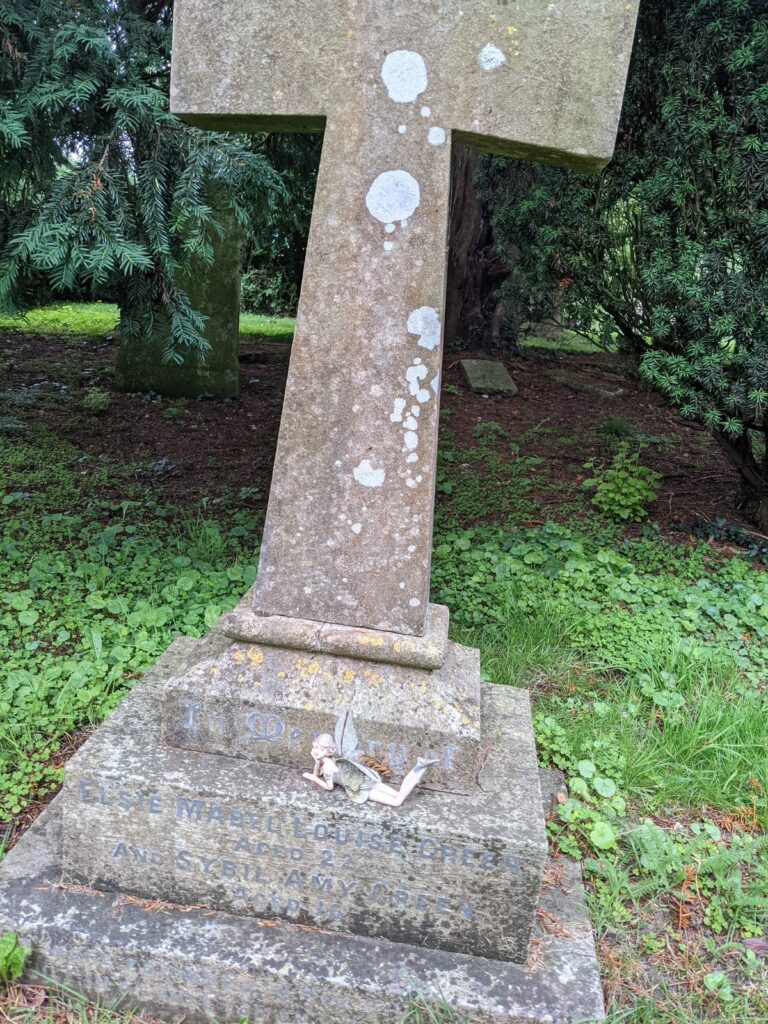 The first grave on the left as you go through the gate is a lichen-stained cross, for sisters Elsie and Sybil Green who drowned in 1908, aged 22 and 16. They were on their way home from a shopping trip to buy hats when they fell into the river on a foggy day, just a few hundred yards from their house. I sometimes wonder whether their family picked this gravesite because it’s the one furthest from the river, so that Elsie and Sybil wouldn’t hear its slow, beguiling call as they slept. A year or two ago, someone placed a plastic fairy-doll on their grave. It touches me, that somebody else is thinking of them, memorialising them.
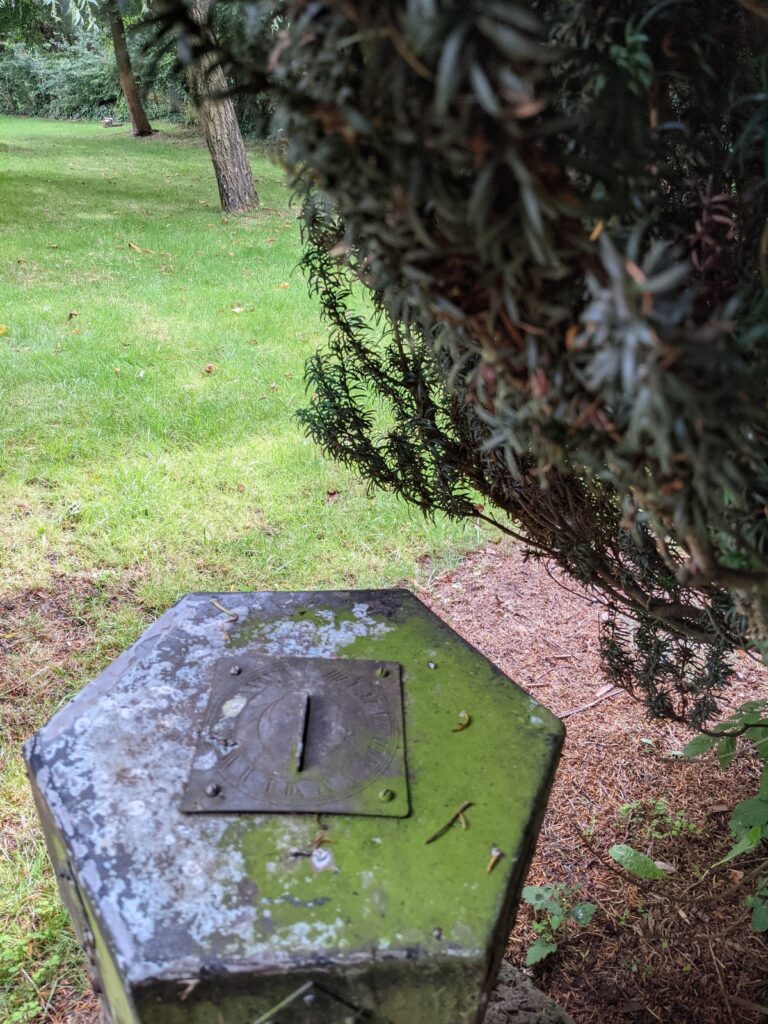 There is an old, rotting wooden sundial trapped in the perpetual shade between two yew trees. It must have been a sunny spot once, before the yew trees grew up in their silent stillness. The Lady of Lydlinch’s heart was buried nearby, in the 14th century. During excavations 500 years later, they dug up her urn and found that her heart had turned to earth. Her urn is in the church wall now, behind an iron grate. She feels further away, more distant than Elsie and Sybil. I can’t imagine her face, her laughter, as I do theirs.
On the far side of the churchyard, close to the river that took Elsie and Sybil, is my father’s memorial stone. A plastic windmill nearby putters around and around in the breeze. There is music in the trees, the beeches and the chestnuts, the poplars and the willows, as the wind hushes through them. There is a special word for the sound the wind makes in the leaves of trees. Psithurism. It comes from the Greek psithuros, whispering. I don’t care for it, this word. It seems, to me, to diminish the interaction it attempts to describe. I feel similarly about the word petrichor, the scent of rain on earth. These are words invented to capture that which should not be captured.
From my place beneath the chestnut tree I can see the old graves, the ones where bodies were buried in the earth, to become the earth. I can see the rows of memorial stones, for those who chose fire over earth. I can see plastic flowers, and planters from garden centres, supermarket roses, vases. Some people plant bulbs, bright splashes of colour unfurling into winter frost. I can see the wild areas, the parts left to nature, where snowdrops grow in spring and blackberries ripen in autumn. One summer, a cinnabar moth, a trembling stripe of red and black, lands on the grass beside my father’s grave.
There are rules, often broken, about what can be placed on a grave or memorial stone. No glass. Nothing poking out, in case it gets in the way of the strimmers they use to keep the grass neat. I can see which families are rule breakers and which are rule keepers. I can see the graves where nobody visits. I can see aeroplanes rising into the sky, poisonous and beautiful, the shimmer of fuel they leave in the air, the trails they map across the sky. From the farm next door, the faint bleating of sheep.
Deer come at night to eat the roses my mother brings for my father. She begins to spray the roses with fake snow intended for decorating plastic Christmas trees, hoping the deer won’t like the taste, but still, sometimes, she will come to the churchyard and find the heads of the roses neatly bitten off. She resorts to plastic roses, alternating between bunches, one pink, one cream, and experiments with potted plants to see what the deer do and do not find pleasing to their tastebuds. It has become a battle of wits. I never tell her I’m on the side of the deer. That I like to think of them munching happily on those supermarket roses, their trembling breath and legs connecting with the ground that covers my father. He would like it too, I think, to be visited by the deer on nights when otherwise there would only be ghosts for company.
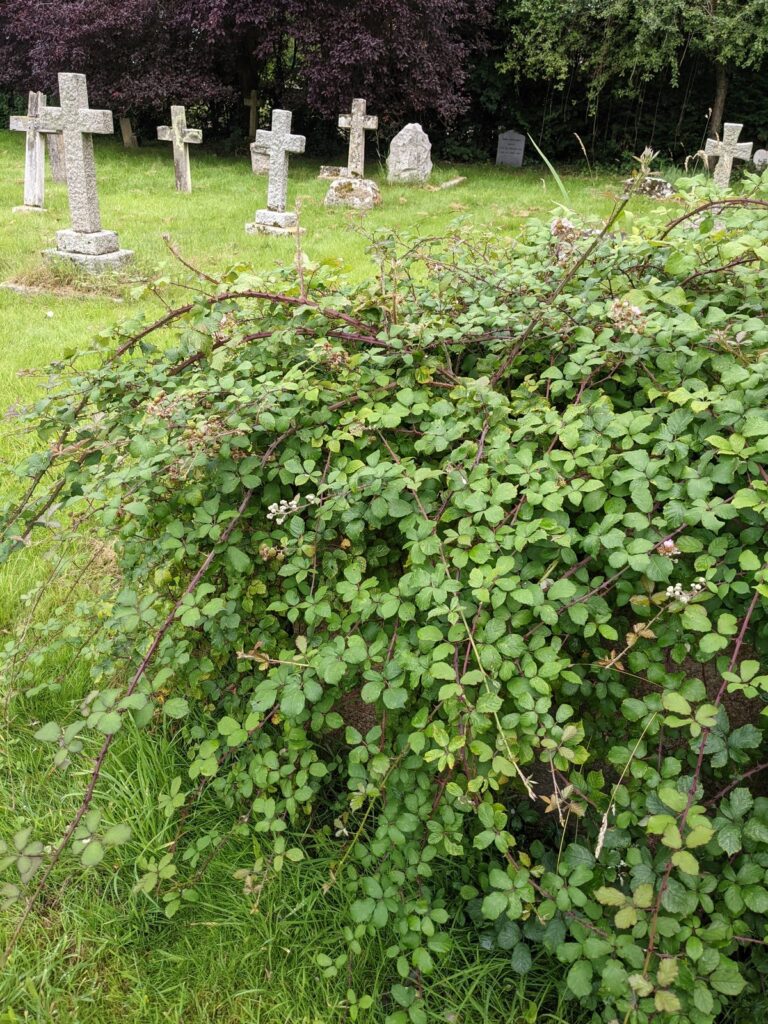 The churchyard is almost full. In a few years’ time there will be no more space for memorial stones, as there is already no more space for burials. There is a thicket, all brambles and morning glory. I walk around it, trying to peer in. Something lives in there, but I don’t know what. They could clear away the wild pockets, to make more space for the dead. Cut the thicket back. Chop down the trees. Tear up the snowdrops. But I have faith that they won’t. These tiny wild pockets are our balance, the spaces that push back against supermarket roses and fairy-dolls and spray-on snow and plastic windmills. Spaces where our hearts can return to the earth.
A tourist, come all the way from France, asks me, Where is the grave of the drowned sisters? Where is the Lady’s heart? Where is the sundial that is always in shadow? I duck beneath the willow trees to point him in the right direction, then return to my mother and father, one living and one dead.
Back in my home city, I stroll through the municipal cemetery, vast and neat and geometric. It has trees and grass, teddy bears and statues, rule breakers and rule keepers. And it has spaces in between. Spaces that could be wild. Spaces that could balance plastic roses with wildflowers, permanency with the fleetingness of poppies and cornflowers. We should be ephemeral, I think. We should be ghosts on the surface of the planet. We should not leave scars. Our hearts should return to the earth.
Inspiration: This piece was inspired by my reflections when visiting my father’s memorial in a churchyard in Dorset, a space that is carefully managed to encourage nature and wildlife.
Photographs by Annie Kirby.
Annie is a writer and part-time university researcher living in Portsmouth. Her short stories have been published in anthologies and online, and broadcast on local and national radio. Her first novel, The Hollow Sea, will be published in August 2022.