

Sky Food
By Sue Harper
After the Great Blizzard, Portsmouth looked like the North Pole. Snow was six feet high in the streets, deeper where it had drifted, and little narrow walkways were excavated where people could walk two abreast or pass each other in single file. The electricity supply had been spasmodic, but as it was so cold, it did not matter much: the whole world was a deep freeze. People ate from tins or from frozen stashes in their gardens. There were no fresh vegetables and few edible animals, of course. They had all died. And what would be left to eat, once the tins had been finished?
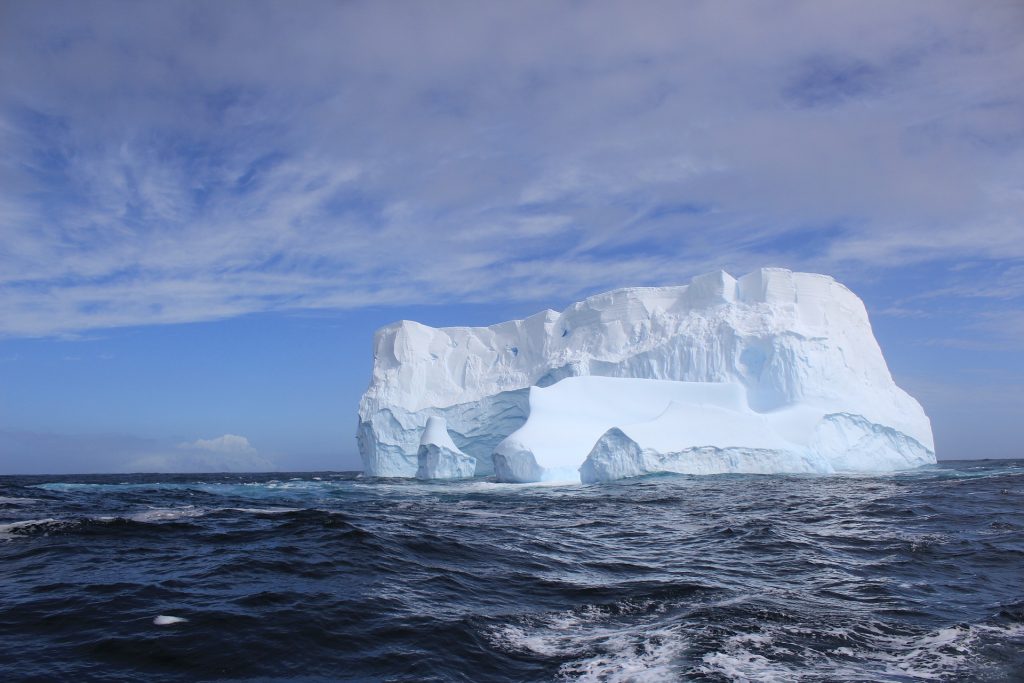
People still used to gather on The Hard. One day, they detected a slight thaw in the air, and there were flurries where the snow began to melt. Folk looked out to the sea, which was beginning to unfreeze, and could hardly believe their eyes. An enormous iceberg, no doubt separated from a glacier, was bearing down upon them. Slowly, majestically, it was coming in to port. It bore down inexorably on HMS Warrior, and split in two. The crack was deafening.
Cautiously, the crowd moved forward to look. At the centre of the iceberg, where it had split open, there was something green. It was a huge fungus, which seemed to take heart from the weak sun, and it trembled and stirred. One might almost think it was whispering to itself. Then there was a soft ‘pop’, and millions upon millions of spores were cast into the upper air. They covered the Mudlark statue, they covered the Victory. People returned to their homes, hoping that it was nothing.
But in the next few days, they found that it was not nothing. Every single building, from the bottom to the top, gradually became covered in green growth. The spores had taken hold, and the plants were growing apace. Were they lichen, or fungi? No-one knew. The leaves were plump and juicy, with frilled edges, and they exuded a smell like honey. People were terrified of them. The plants pressed in on the windows, they hummed and shone in the returning sunlight. What could they be for?
One day, an intrepid soul leaned out of his balcony, plucked a leaf and ate it. A small crowd watched, expecting him to scream and shrivel, but not a bit of it. The leaf was crunchy and sweet, and he threw back his head and laughed. Gradually people began to try it themselves. It was like a festival. The plant was at once stimulating and relaxing, and it gave a sense of well-being. People husbanded it, festooned it round their doors, loved it, lived from it. There was enough for everyone, and it was free. The greening of Portsmouth had come at last.
Inspiration: Much futuristic or science-fiction writing is in the realist mode. I thought there was room for some visionary or surrealist work on ecological issues, and I wanted to make a contrast between the Portsmouth we know (the Hard, the Victory) and the Portsmouth that there might be, if something strange arrived from outside.