
Pens of the Earth has always been about celebrating the things which people can do to make a difference: positive tales of environmental grass roots change. Our 2021 theme, ‘Small Differences Add Up’, was inspired by Andy Ames of Wilder Portsmouth, who said ‘everyone can make a small difference’ and that it all adds up. Andy is aiming to engage 1 in 4 people in Portsmouth in some way: ‘at that point things tip over and behaviour changes.’
We also began fundraising in aid of Wilder Portsmouth. You can contribute to our fundraiser here.
Workshop Video
If you missed our online ‘Streets For People’ workshop, the video is now available to watch here:
Your Answers to Our Questions 2
Poets, we’d love your thoughts on what the challenges are in interpreting this year’s Small Differences Add Up theme. How do you start creating a poem for a specific theme? Where does your inspiration come from? And how do you shape your ideas?
Walk through the city and open my eyes to what is already there. Sit on a bench and write what I see.
Christine Lawrence
Go for a walk in the woods or to the sea or do Tai Chi or yoga. Do anything other than sit down with a pen in my hand. Allow myself to play with the idea in my mind. Then at some point find myself frantically scrabbling for a pen to jot my ideas down. When I’m very lucky it emerges almost fully formed. Rare!
Helen Salsbury
Set the alarm clock to wake you 90 mins after you go to bed. Don’t think but write whatever comes. Sleep on it, then work with it over the next few days, weeks…
Amanda Garrie
Think of something specific to represent the universal.
Start by putting one word in front of another…
Make a list of things that have/can make a small difference and then concentrate on just one of them. Let the idea settle and become part of your imagination then jot down words/lines until you have the one good line that will begin a poem. The first line of a poem is as important as the first line of a short story/novel. One editor of a well known literary magazine said that if the first line didn’t grab him he didn’t bother to read the rest.
Maggie Sawkins
It’s always a challenge when a theme or form is imposed but also inspirational and a motivation to try something a bit different. I tend to start with a visual image, line or story, then build on rhyme and rhythm as the words flow (hopefully).
Tina MacNaughton
Clare Seek
Clare Seek (of the Portsmouth Repair Café, Plastic Free Portsmouth and Portsmouth Green Drinks) shares what ‘small differences’ means to her:
Your Answers to Our Questions
Do you do research when you write? Or do you just run with what you know? When it comes to our theme, how might you approach it?
I do a small amount of preliminary research, just enough so I can write about the topic. Then I try to stay away from the research while I complete a first draft, as it’s too easy to (a) use research as procrastination and (b) be tempted to have all your research visible on the page when sometimes it needs to be beneath the surface. Then during the first edit, I identify anything I’m not fully confident about & throw myself into research then. This can mean painful changes during the edit, but I love having freedom during the first draft!
So, for the piece I plan to submit, I’ll lightly research whatever environmental topic I choose to write about, but then put my research aside and let my imagination take over in the writing.
Annie Kirby
I usually start with an idea, run at it, and research on the way. But this time round I’m researching for another project and then as the ideas grow, I file together lots of potential storylines before I start writing the novel. I will of course continue researching all throughout the process though.
Christine Lawrence
I always do a bit of research, (a) to provide extra inspiration and detail, and (b) to try and eliminate any embarrassing mistakes!
Richard Salsbury
Whenever possible I do ‘live’ research before I start writing (and even plotting): visiting the area I’m setting the story in, talking to people, getting physically involved, perhaps volunteering. It all helps me capture the genuine experience.
Helen Salsbury
What little environmental efforts from others have you noticed recently? What’s the story behind this? Who might have done it?
There is a wide grass verge not far from my house which the council has left to grow wild this year. I can already see the wildflowers emerging.
Wendy Metcalfe
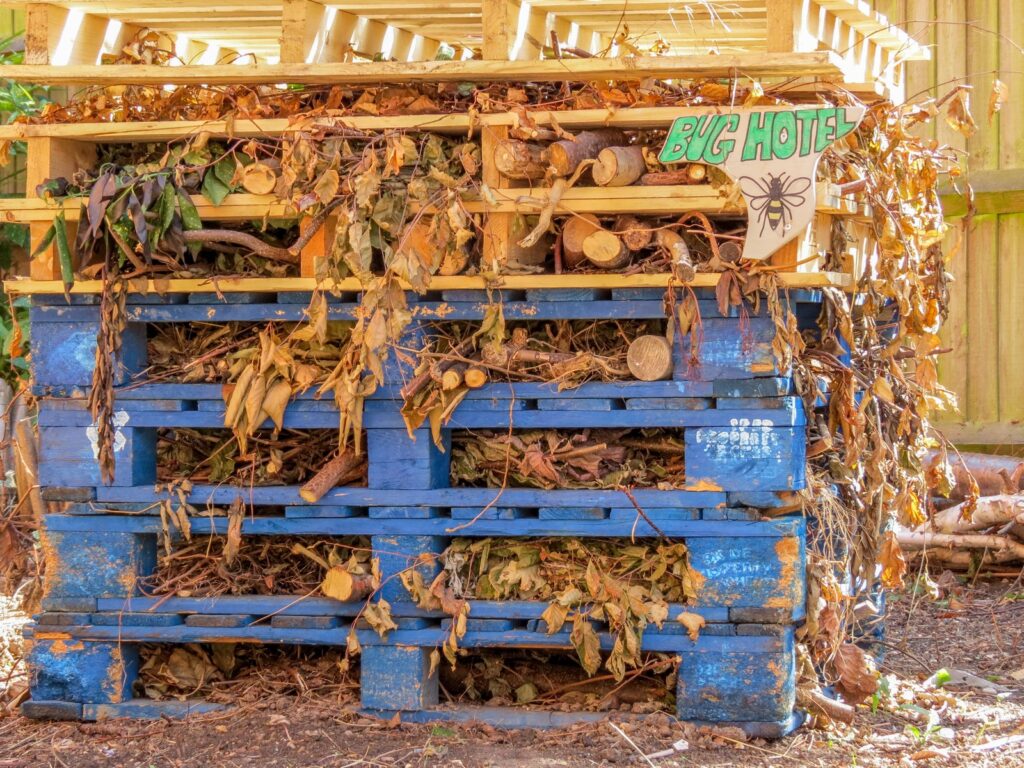
One of my neighbour’s children has a ‘bug hotel’ in their front forecourt. Just some old bits of wood stacked up but it also has a little welcome sign which I love. So simple to do but I’m sure it’s a little oasis for the local insect population.
Annie Kirby
A neighbour a few streets away has turned her front garden into a wildflower meadow. We spoke to her and she said she has no idea what she’s doing – just tries things out. The results are fantastic!
Richard Salsbury
How might you interpret our theme in a creative and environmentally positive way? What questions might you want to ask us? What information might you like to have?
The truest art I would strive for in any work would be to give the page the same qualities as earth: weather would land on it harshly, light would elucidate the most difficult truths; wind would sweep away obtuse padding.’
Gretal Ehrlich (quote provided by Alison Habens)
Andy Ames
Andy Ames of Wilder Portsmouth talks about joining up oases of wildlife across the city:
“The 2019 State of Nature Report revealed that 41% of UK species populations have decreased since 1970 and 15% of our species are threatened with extinction. These are dramatic declines driven by habitat loss, urbanisation, and pollution. But, if we manage our city to benefit wildlife and learn to invite nature into our lives, creatures, big and small, will find refuge and thrive. The impact of one small action will multiply and benefit whole ecosystems due to the many connections, relationships, and dependencies that exist in nature.
Everyone has a part to play in creating a Wilder Portsmouth, and we must work together. Your voice matters and local collective action counts. We need different people playing different parts – rebels and advocates, artists and writers, funders and supporters, doers and thinkers. We need to come together to use our individual talents, knowledge and perspectives to bring nature back.
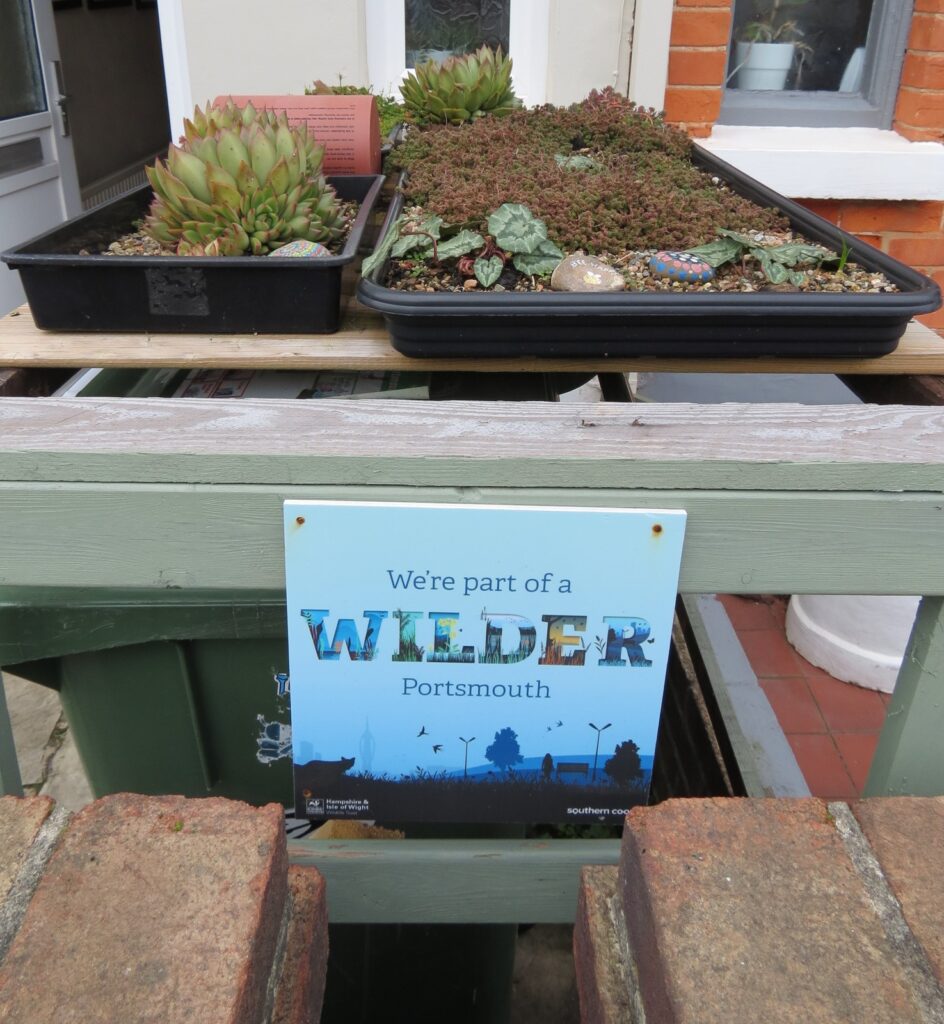
Portsmouth has a rich variety of wildlife spread across the city and by empowering our local communities we will be able to better connect these spaces and encourage nature to thrive. Neighbours are cutting hedgehog-sized arches in their fences, putting green roofs on their bin shelters and are growing pollinator friendly flowers. Artists are painting wildlife murals, churches are pledging to make their grounds wilder, and schools are embracing outdoor education.
Everyone can make a difference however small – it all adds up.
Natural and wild places have provided a lifeline for people across Portsmouth over the past year, providing essential outside space to relax, exercise, play and spend time with friends and family. Access to nature is known to benefit peoples’ physical and mental health, leading to reductions in depression, anxiety and obesity. However, the pandemic has highlighted vast inequalities in access to green and natural spaces. One in eight households have no garden and rely entirely on public open spaces, and yet there is not enough quality green spaces in our urban areas. We need more wild, green, and natural spaces for our mental health, our community and our wildlife.
With a lot of wasted space in our towns and cities, there’s a tremendous opportunity to transform these spaces into bright colourful places full of life. Any area, no matter how small, will contribute to a Nature Recovery Network, and help rewild where we live.
Help the Wildlife Trust in greening the grey and connecting everyone to their wilder sides by identifying wasted space. We’re looking for spaces that are unused by the community and unwelcoming for wildlife. These include pieces of grass between houses, unused paved-over spaces, or that patch of grass at the corner of your street. If you look at a physical map of the island you can see the green spaces that we have. What we need to do is connect them together, focussing on the grey chunks in between and creating wildlife corridors for nature. Corridors are about ways to link pockets of different wildlife-rich habitats. Roads and buildings create huge barriers to wildlife. By filling in the gaps and connecting what must seem like an impossible obstacle course, wildlife – both great and small – can move safely from one place to another.
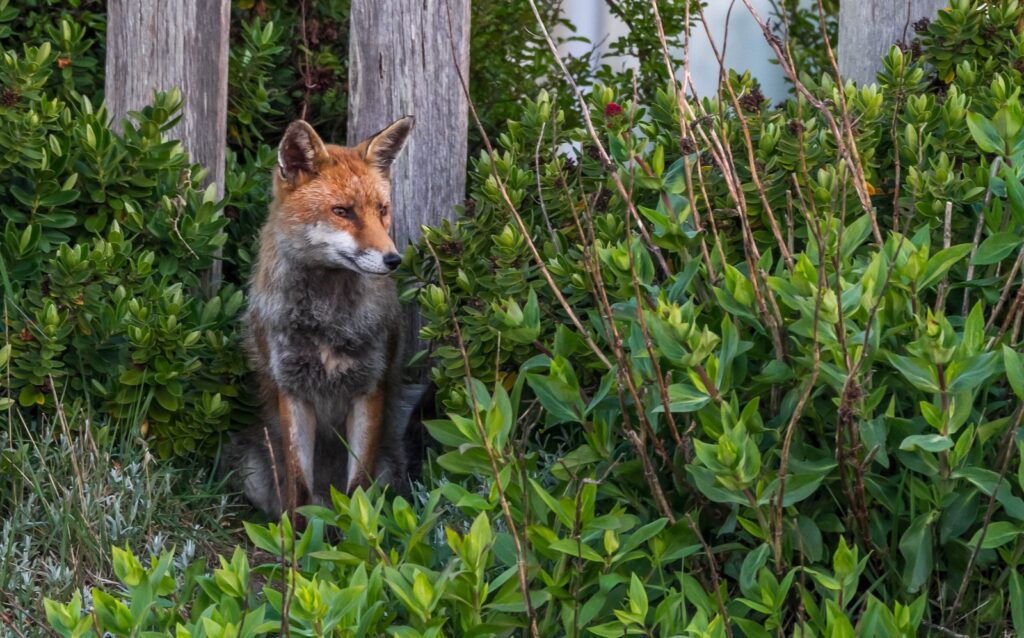
What counts as a Wildlife Corridor? Basically, anything that can provide a ‘stepping stone’ between habitats! Wildlife corridors can be large and specially designed. Alternatively, they can be very small – your garden, school, place of work or the bit of scrub at the end of your street can become a stepping stone for nature.”
School Streets
Jenni Jones, the Liveable Cities & Towns Officer for Sustrans, reports on the changes that can be made to the school run:
“School Streets are coming to Portsmouth! St Jude’s C of E Primary and Bramble Infant and Nursery School will be piloting the scheme in September.
What is a School Street? Here’s our standard response: ‘A school street is where a road (or section of road) outside the school gates is closed to motor vehicles and becomes a pedestrian and cycle zone at drop-off and pick-up times’. A sturdy, practical description to be sure, but inspired by Pens of the Earth, perhaps we can do better?
A School Street is a place where many people making small changes can totally transform the environment, the atmosphere, the experience of the school run for the whole school community. In a School Street, so many people go the extra mile and the result is a healthier, happier, safer place for everyone. It’s the working parents who leave home that little bit earlier so they can walk, cycle or even just park and stride those last few minutes with their children. Thank you! It’s the residents who drive slowly through the area to keep the kids safe, and who maybe even volunteer to manage the closures because they know their street is a better place when children come before cars.
Hats off as well to the incredible school staff who take on this challenge even though they’re already maxed out, because they know that the children need to move more and breathe toxins less. And of course, above all it’s about the children, free from the stress of negotiating traffic, free to just run and play and do what kids do.
There are hundreds of children in every school, so every School Street has the power to inspire hundreds of small changes every day. Of course it makes a difference! The air becomes cleaner, congestion reduces, the road is safer, most residents are happier, and the children’s mental and physical wellbeing gets a daily boost.
All small changes are worthwhile, but School Streets show that when we work together as a community, those small changes can become something really special and inspirational to others.”
For more info:
Twitter List
Looking for inspiration for our #SmallDifferencesAddUp theme? We’ve created a Twitter list of local environmental campaigns: click here for details.
Hedgehog
Janet Brown finds a visitor in her garden:
“We took part in Plantlife’s ‘No Mow May’ and instead of cutting the whole back lawn at the end of the month, a section to one side was left to grow. I was very excited to spot this hedgehog from the kitchen window at around 7.30 am one morning. It was walking around the garden pulling up long grass and leaves, and carrying them back each time along the same route, between some plant pots. Later we had a look and it had made a cosy, grassy bed tucked away in a sheltered dense part of the garden and lodged with us that day.”
“He was back again the other evening but this time just passing through. A little more video footage was achieved. It made my day!”
Megan Howson (Reflections)
Megan, a member of Portsmouth Friends of the Earth, updates us on environmental initiatives in the city:
“The question that environmental groups are asking themselves in 2021 is: how can we be most effective in helping to tackle climate breakdown? Climate change and the destruction of the natural world, the loss of species and the damage to biodiversity are inextricably linked.
The task can seem overwhelming and many people, although they are aware of climate change, assume that the solutions have to come from somewhere else: the government or large corporations. While there is some truth to this, it is also true that efforts can be made at all levels; local councils, small businesses, communities and individuals. Friends of the Earth believes that change starts at the grassroots with the engagement of neighbourhoods and collaboration with other groups.
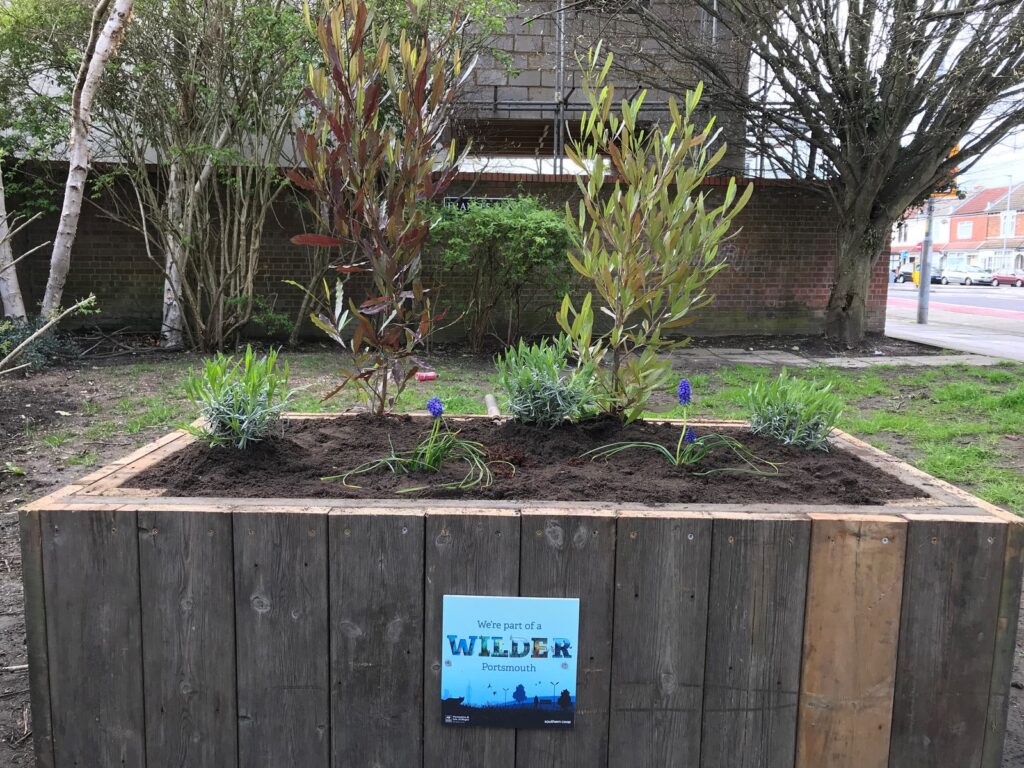
Portsmouth Friends of the Earth has identified the north end of the city as an area where we will engage with local people to find out what is most important to them about their environment and take steps to improve it. As well as supporting campaigns for active travel this year we have cleared and replanted two large raised planters with the help of the council and by collaborating with other voluntary groups. This will make the area a more pleasant place to walk and cycle and will do its bit to sequester carbon. A local voluntary group will maintain the planters.
Our next project is in its early stages but involves consulting with local people about improving a dead-end street that is over-paved, underplanted, and underused. We are hoping that the improvement will make the area more pleasant, will add to the biodiversity needed in the area and will act as an exemplar.
The Portsmouth Climate Board, of which we are a member, has been tasked with engaging with the people of Portsmouth to take action to mitigate the effects of climate change. Again, the philosophy is that small changes, when cumulative, will make a difference. The government, at all levels, is concentrating on reducing emissions caused by cars, homes and industry. These emissions are clear and can be measured. Pathways to net zero nationally in these sectors have been devised.
What they are not so good at are the indirect emissions caused by our everyday consumption: the food we eat, the clothes we wear, our foreign holidays, our car use and in fact all of the things we use in our lives. These are harder to measure but we know they make up about 50% of our carbon emissions. Our race to net zero carbon emissions does not include these emissions. Most of the goods we buy are imported and each item has a carbon footprint.
People can make a difference by making small changes in their buying habits. Just as one vote doesn’t make a difference, one person’s changes don’t make a difference. But if we all make changes then we will make an amazing difference. Groups are being organized through the climate board, accessed through the website to engage individuals and their communities to spread the word.
Greening the city is another aim. Gardens make up a large percentage of green space in Portsmouth and sadly a lot of them are paved to make way for parking and green space otherwise has been replaced by concrete or paving. Likewise, there is public property and neglected areas that have the potential to be greened. Again, small changes added together make a significant difference.
Big environmental changes come from lots of small conversations. We can all do our bit to have the conversations about our buying habits and mindfulness about our place in nature. We are a part of nature and have a duty not to damage it and to leave a world fit for purpose for the next and further generations.”